 By Lawrence Perez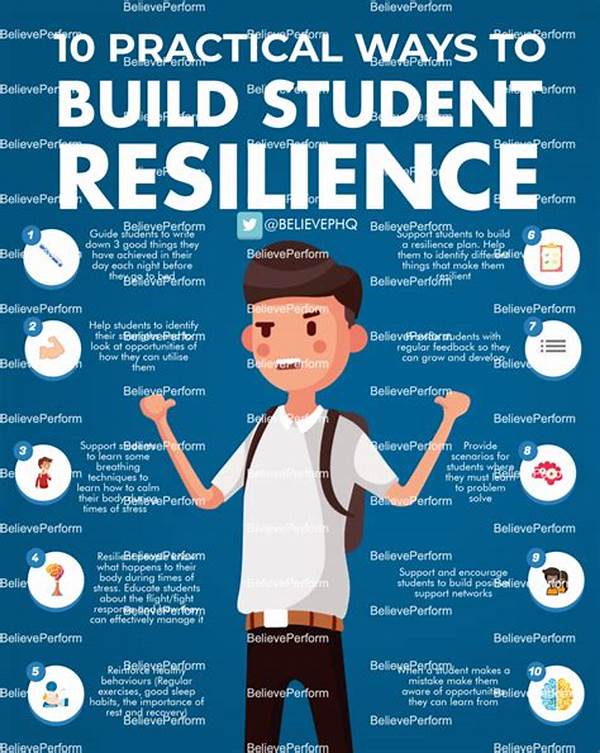
 0
0
 0
0
In the current educational paradigm, fostering resilience among students has become an increasingly important focus for educators and policymakers alike. Resilience, in this context, refers to the capacity of students to withstand, adapt to, and overcome challenges and adversities in their academic journeys. As the educational landscape becomes progressively complex and demanding, identifying effective techniques to enhance student resilience is vital. By doing so, educators can empower students to not only cope with challenges but also to thrive academically and personally. This article aims to explore various strategies and their implementation in educational settings.
Read Now : Unlocking Creativity Amidst Artistic Blocks
Understanding the Importance of Student Resilience
Student resilience is a multifaceted construct that plays a critical role in academic success and personal development. To comprehend the significance of resilience, it is essential to analyze its impact on students’ ability to navigate the challenges presented by educational demands. Techniques to enhance student resilience are not merely about helping students to endure but about equipping them with skills to transform obstacles into opportunities for growth.
The development of resilience enables students to handle stress more effectively, which is crucial in today’s fast-paced learning environments. With the right techniques to enhance student resilience, students learn to process setbacks constructively, thereby improving their problem-solving skills and boosting their confidence in handling future challenges. Moreover, resilient students often demonstrate higher levels of motivation and engagement, contributing positively to their overall educational experiences.
Implementing techniques to enhance student resilience can significantly influence their mental health and well-being. By fostering a robust support system, both in academic settings and personal lives, students can develop a more optimistic outlook towards their educational pursuits. Consequently, this can lead to better academic outcomes, higher retention rates, and a more fulfilling and enriching educational experience.
Five Key Techniques to Enhance Student Resilience
1. Promoting a Growth Mindset: Encouraging students to adopt a growth mindset helps them view challenges as opportunities for development. This perspective is a pivotal technique to enhance student resilience by fostering perseverance and adaptability.
2. Building a Supportive Environment: Establishing a nurturing and inclusive educational environment allows students to feel valued and understood. This approach plays a vital role in the techniques to enhance student resilience.
3. Encouraging Self-Reflection: Techniques to enhance student resilience often include self-reflection practices, enabling students to understand their emotions and reactions. This awareness aids in developing coping strategies.
4. Facilitating Stress Management Workshops: Offering workshops that focus on stress management provides students with tools to handle academic pressures effectively, thereby serving as a crucial technique to enhance student resilience.
5. Implementing Mentorship Programs: Guidance from mentors can significantly impact a student’s ability to overcome adversities, positioning mentorship as a fundamental technique to enhance student resilience.
Strategies for Educators to Implement Resilience Techniques
Educators play a crucial role in implementing techniques to enhance student resilience within the classroom. By adopting evidence-based strategies, they can effectively support students in developing resilience skills. One practical approach is incorporating social-emotional learning (SEL) programs that focus on the development of emotional intelligence, empathy, and interpersonal skills. These programs are integral in teaching students how to manage emotions, set positive goals, and establish healthy relationships.
Moreover, educators can integrate resilience-building activities into daily classroom routines. For instance, activities that promote problem-solving and critical thinking can enhance students’ capability to confront setbacks with a strategic mindset. Providing constructive feedback also constitutes a relevant technique to enhance student resilience. When feedback is specific and focused on effort rather than the outcome, students are encouraged to persist through challenges and learn from their experiences.
It is imperative for educators to model resilience in their behavior and attitudes. Demonstrating optimism and a solution-oriented mindset can inspire students to adopt similar attitudes. Educators should also prioritize open communication, creating an environment where students feel safe discussing their concerns and challenges. By fostering such an environment, the techniques to enhance student resilience become more effective and sustainable, encouraging students to grow confidently.
Ten Resilience-Enhancing Practices for Students
1. Setting Realistic Goals: Clear and attainable goals help students focus their efforts, forming a core technique to enhance student resilience.
2. Developing Problem-Solving Skills: Teaching students to approach challenges systematically increases their confidence in overcoming obstacles.
3. Encouraging Positive Relationships: Supportive peer and teacher relationships are essential for building resilience.
4. Practicing Mindfulness: Mindfulness techniques empower students to stay present and manage stress more effectively.
5. Fostering Independence: Enabling students to take initiative in their learning strengthens their resilience.
Read Now : Unleashing Writers’ Imaginative Potential
6. Highlighting Role Models: Introducing students to relatable role models can motivate them to develop resilient traits.
7. Utilizing Resilience Narratives: Sharing stories of resilience can provide students with relatable examples and strategies.
8. Celebrating Small Successes: Acknowledging minor achievements can enhance a student’s belief in their capabilities.
9. Providing Access to Resources: Access to counseling and support resources is a critical aspect of techniques to enhance student resilience.
10. Encouraging Flexibility and Adaptability: Preparing students for change equips them with skills to adapt in unpredictable situations.
Implementing Techniques Across Different Age Groups
Implementing techniques to enhance student resilience should be tailored to accommodate varying developmental stages. For young children, resilience training may involve structured play and storytelling that allow them to explore emotions and problem-solving in a supportive environment. At this stage, educators can incorporate activities such as role-playing and collaborative games that encourage sharing, empathy, and teamwork. These foundational skills are crucial for building resilience from an early age.
In contrast, adolescent students may benefit from more sophisticated approaches, such as reflective journaling and peer discussions that deepen their understanding of personal challenges and strengths. Educators can facilitate workshops on emotional intelligence and stress management, providing teenagers with pragmatic tools to handle increased academic and social pressures. Additionally, mentorship programs can offer personalized guidance, helping adolescents navigate complex emotional landscapes and setting the foundation for lifelong resilience.
At the tertiary education level, techniques to enhance student resilience might focus on self-efficacy and professional development. Initiatives like career planning sessions, research opportunities, and networking events prepare students to transition into the workforce with confidence. Furthermore, universities can offer mental health services tailored to address high-stress periods, equipping students with resilience to thrive in academic and professional realms. Across all age groups, the essence lies in adapting the techniques to meet the unique needs and capabilities of each student cohort.
Challenges and Solutions in Building Student Resilience
While implementing techniques to enhance student resilience is essential, various challenges may arise in the process. One significant challenge is the variability in students’ receptiveness to resilience-building initiatives. Some students may display resistance or lack of engagement, hindering the effectiveness of these techniques. To address this, educators should strive to understand individual student needs and preferences, adapting strategies to better resonate with diverse learners.
Another challenge is the limited resources available to schools to implement comprehensive resilience programs. Budget constraints may restrict access to training, workshops, or additional staff support crucial for these initiatives. In such cases, leveraging community resources and forming partnerships with mental health organizations can offset this limitation. Schools might also consider incorporating resilience training within existing curricular and extracurricular activities, making it a more seamless component of the educational framework.
Educators themselves may face challenges in maintaining consistent implementation of these techniques amidst competing academic demands. It is essential for schools to provide professional development opportunities that equip educators with the necessary skills and resources to effectively foster resilience. By prioritizing these developments, educators can better integrate techniques to enhance student resilience within their daily practice, ultimately creating an educational environment that values and supports student well-being and resilience.
Summary of Effective Resilience Techniques
In summation, the integration of techniques to enhance student resilience across educational settings is indispensable for nurturing well-rounded and capable learners. These techniques not only empower students to face academic challenges confidently but also contribute significantly to their emotional and psychological well-being. By adopting strategies such as promoting a growth mindset, fostering supportive environments, encouraging self-reflection, and providing tailored mentorship, educators and institutions can facilitate the development of resilient traits among students.
The holistic approach to building resilience considers the diverse age groups and developmental stages of students, ensuring that each technique is appropriately tailored to meet specific needs. Despite the challenges faced in implementing these strategies, solutions such as leveraging community partnerships and prioritizing educator development can mitigate potential obstacles. Ultimately, investing in these techniques to enhance student resilience is a pivotal educational commitment that promises to yield long-term benefits for students, enabling them to navigate life’s complexities with greater assurance and capability.


