 By Lawrence Perez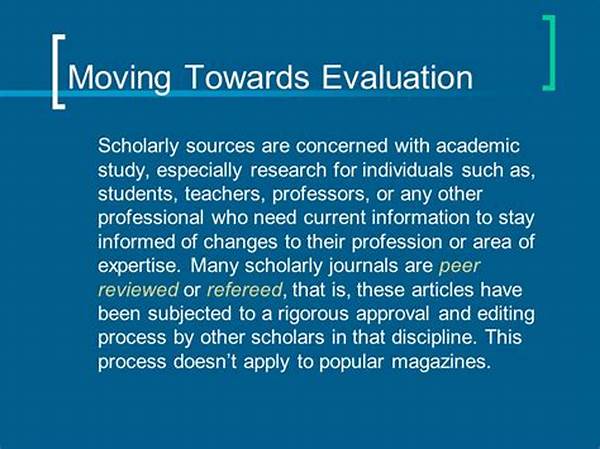
 0
0
 0
0
The evaluation of scholarly articles represents a cornerstone in the scientific community, serving as the bedrock for validating and disseminating research findings. A rigorous evaluation of scholarly articles ensures that only high-quality research with significant contributions is published. The primary goal of this evaluative process is to maintain the integrity and credibility of scientific literature. The intricacies involved in evaluating scholarly work require adherence to standardized methods and professional ethics, which reinforce the trust academia places in published research.
Read Now : Enhancing Decision-making Capabilities
The Importance of Quality Assurance
Scholarly articles undergo a meticulous review process to maintain the academic quality and trust of published works. The rigorous evaluation of scholarly articles is essential for ensuring the validity and reliability of research findings. Through peer review, experts in the field scrutinize submissions for methodological soundness, originality, and contribution to the existing body of knowledge. This process helps identify potential shortcomings and areas for improvement, thereby enhancing the overall quality of academic publishing. Without such stringent evaluation, the proliferation of unverifiable findings could undermine scientific integrity. Consequently, the academic community emphasizes quality assurance as a pillar of scholarly publishing.
The rigorous evaluation of scholarly articles is not solely confined to assessing technical aspects but also encompasses ethical considerations. Ensuring adherence to ethical standards during research and in reporting findings is imperative to prevent misconduct and promote transparency. By demanding compliance with ethical guidelines, the evaluation process safeguards against plagiarism, data fabrication, and other malpractices. This comprehensive scrutiny helps in fostering a culture of integrity and accountability, vital for advancing scientific knowledge conscientiously. Ultimately, rigorous evaluation enforces stringent standards that reinforce trust within the academic community and among the wider public engaged with scientific discourse.
Components of Rigorous Evaluation
1. Peer Review: The rigorous evaluation of scholarly articles primarily relies on peer review, where subject matter experts critically appraise the research.
2. Methodology Assessment: The research design, data collection, and analysis methods are thoroughly evaluated to ensure reliability and reproducibility.
3. Originality Check: Ensures the work contributes novel insights to the field and is not redundant with existing literature.
4. Ethical Compliance: Reviewers assess adherence to ethical standards, including informed consent and data integrity.
5. Contribution to Knowledge: The work’s potential impact and relevance to the field are evaluated, determining its suitability for publication.
The Role of Peer Review in Scholarly Evaluation
Peer review is a fundamental mechanism ensuring the scholarly integrity of academic publications. It stands as the pillar of the rigorous evaluation of scholarly articles by soliciting input from experts who assess the quality and validity of a manuscript. This evaluative practice acts as a filter, where only research that meets stringent scientific and ethical standards is endorsed for publication. The peer review process is instrumental in challenging authors to refine their work, address potential limitations, and substantiate claims, thereby enhancing the manuscript’s overall quality.
Read Now : Strategies For Promoting Responsible Learning
The rigorous evaluation of scholarly articles through peer review not only serves the interests of the scientific community but also endows credibility to academic publishers. This credibility is achieved by providing a platform where intellectual rigor is celebrated, and scientific discourse thrives on merit. While peer review is not without its criticisms—such as inherent biases and the potential for subjective judgements—it remains the best available system for ensuring scientific reliability. As academia evolves, the peer review process itself continues to adapt, incorporating innovations such as open peer reviews and collaborative online platforms to further enhance transparency and accountability in scholarly evaluations.
Principles Underpinning Rigorous Evaluation
Challenges in Scholarly Article Evaluation
While the rigorous evaluation of scholarly articles serves as a critical process for maintaining academic credibility, it is not without its challenges. A prominent issue is the potential for reviewer bias, which can emerge from personal beliefs, competitive interests, or cultural perspectives. Such biases can skew the assessment of research quality, leading to the unjust rejection or approval of manuscripts. Furthermore, the peer review process is often time-consuming, leading to delays in the dissemination of new knowledge. These delays can impede scientific progress, particularly in rapidly evolving fields where timely publication is crucial.
Another challenge in the rigorous evaluation of scholarly articles is balancing a thorough review with constructive feedback. Providing detailed criticism without discouraging authors is a delicate task that requires diplomatic communication. Reviewers must ensure that their evaluations are specific, fair, and aimed at improving the manuscript. Additionally, there is an increasing necessity for methodological expertise in interdisciplinary research, where reviewers may not be familiar with all employed research methods. To address these challenges, many journals are adopting double-blind reviews, implementing reviewer training programs, and utilizing technological solutions to expedite the evaluation process, thus enhancing fairness and efficiency in scholarly evaluations.
Summary and Future Directions
The rigorous evaluation of scholarly articles is indispensable for upholding the standards of academic publishing. This thorough process, predominantly enacted through peer review, evaluates research on multiple fronts, including methodological soundness, ethical compliance, and originality. By adhering to these criteria, the academic community ensures that only high-caliber research contributes to the scientific discourse. However, the process is intricate and subject to various challenges, such as potential biases and the time-intensive nature of reviews, calling for ongoing refinement and innovation.
Looking ahead, the future of scholarly evaluation lies in embracing transparency, inclusivity, and technological advancements. Open peer reviews and increased dialogue between reviewers and authors are promising developments enabling more robust evaluations. Institutions and journals are also exploring AI-driven tools to assist in identifying potential issues in submissions, from plagiarism to statistical anomalies. As these innovations take root, they will fortify the rigorous evaluation of scholarly articles, ensuring that academic publishing evolves to meet the demands of a dynamic and diverse research landscape. Through these efforts, the integrity and impact of academic research will continue to grow, bolstering the collective pursuit of knowledge.


