 By Lawrence Perez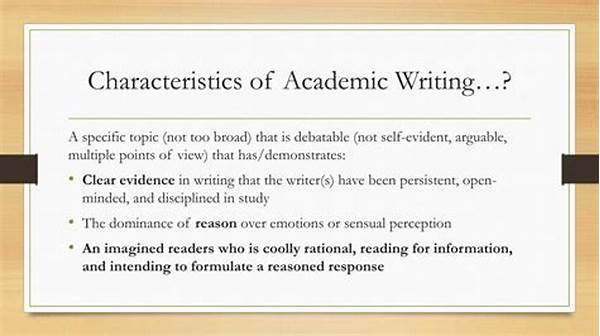
 0
0
 0
0
Academic writing is an essential component of scholarly communication, aiming to convey complex ideas and research findings in a clear, precise, and structured manner. It adheres to specific conventions and standards that distinguish it from other forms of writing. Understanding the characteristics of academic writing is crucial for students, researchers, and professionals who aspire to contribute to their respective fields. This article explores these characteristics, detailing the features that define academic writing and highlighting its significance in scholarly work.
Read Now : Presentation Software For Researchers
Essential Features of Academic Writing
One of the fundamental characteristics of academic writing is its formal tone. Unlike informal writing, which might include colloquial language or personal anecdotes, academic writing requires a more serious and objective approach. This formal style ensures that arguments and data are presented responsibly and respectfully, emphasizing objectivity and the pursuit of truth. Additionally, academic writing is highly structured, following a clear organization that includes an introduction, body, and conclusion. This structure helps guide the reader through the argument or research findings in a logical manner.
Another key characteristic is the use of evidence to support claims. Academic writing relies heavily on data, research findings, and citations from reputable sources to establish credibility and substantiate arguments. Furthermore, precision is a critical aspect of academic writing, necessitating precise vocabulary and technical terms specific to the subject area. This precision ensures that the intended message is communicated without ambiguity. Lastly, academic writing often includes critical analysis, where the writer evaluates and interprets information, providing a thorough understanding of the topic. These characteristics of academic writing ensure that scholarly work maintains rigor and contributes meaningfully to academic discourse.
Elements Highlighting Characteristics
1. Clarity and Precision: Academic writing demands clarity and precision in language to ensure the accurate conveyance of ideas. This characteristic minimizes misinterpretation and enhances comprehension.
2. Structured Format: Adherence to a structured format—typically encompassing introduction, methodology, results, and conclusion—is a hallmark of academic writing.
3. Objective Tone: Maintaining an objective tone, free from personal bias, is essential in fulfilling the characteristics of academic writing, fostering impartiality and academic integrity.
4. Citation and Referencing: Proper citation and referencing are integral to academic writing, demonstrating respect for intellectual property and enhancing the work’s credibility.
5. Complex Vocabulary: A sophisticated vocabulary, appropriate to the academic field, is employed to articulate complex ideas and underline the author’s expertise.
Significance in Scholarly Work
Understanding the characteristics of academic writing is essential for those involved in scholarly pursuits. Firstly, it enhances the clarity of communication, enabling the author to convey intricate concepts effectively. This is particularly important in academia, where the exchange of ideas contributes to the advancement of knowledge. Secondly, adhering to these characteristics promotes academic integrity. By grounding arguments in evidence and maintaining an objective tone, academic writing ensures that ideas are presented honestly and reliably.
Moreover, mastering these characteristics prepares individuals for participation in academic discourse, allowing them to engage with peers and experts in their field effectively. Whether it is through journal articles, conference papers, or dissertations, proficient academic writing skills enable scholars to contribute to their discipline’s body of knowledge. Understanding and implementing the characteristics of academic writing thus serves as a foundation for success in academic and professional endeavors, fostering a culture of intellectual exchange and innovation.
Read Now : Evaluating Sources For Credibility
Precision and Clarity in Academic Writing
Academic writing is characterized by its emphasis on precision and clarity, essential for conveying complex ideas effectively. It employs structured argumentation, supported by empirical evidence, to build a logical and convincing narrative. Additionally, it utilizes an objective and formal tone, avoiding colloquialisms or biased language. Through rigorous adherence to these characteristics of academic writing, scholars can effectively communicate research findings and theoretical propositions. Moreover, academic writing necessitates meticulous attention to structural coherence, ensuring that arguments flow seamlessly and evidence is presented systematically. This careful construction enhances the readability and impact of the work, contributing to the field’s scholarly discourse.
Engaging with Complex Topics
Delving into complex topics requires an understanding of the characteristics of academic writing, which provides the tools necessary for effective articulation of ideas. An academic writer must judiciously balance depth of analysis with clarity, aligning detailed examination with straightforward explanations. This involves synthesizing relevant literature, employing precise terminology, and critically assessing concepts to contribute new insights to the academic community. Furthermore, academic writing facilitates intellectual engagement by fostering a dialogue between the writer’s own findings and existing research. By adhering to its defining characteristics, writers ensure that their contributions are well-grounded, insightful, and poised to advance understanding in their respective fields.
In addition, academic writing requires an appreciation of the ethical standards that underpin scholarly communication. This includes proper attribution of ideas, meticulous citation of sources, and an unwavering commitment to honesty in reporting research findings. These standards protect the integrity of academic discourse and ensure that the characteristics of academic writing serve as a vehicle for credible and impactful scholarship. By adhering to these principles, scholars not only contribute to their field but also uphold the values that sustain a thriving academic community. In this light, academic writing becomes a bridge between ideas, promoting progress across disciplines and fostering a continuous exchange of knowledge and innovation.
Academic Writing and the Role of Literature Review
A crucial component of the characteristics of academic writing is the literature review section, which serves multiple pivotal roles. Firstly, it contextualizes the research by situating it within the existing body of work, highlighting gaps, and identifying where further exploration is warranted. By critically evaluating previous studies, a literature review not only demonstrates the writer’s depth of knowledge but also outlines the theoretical framework underpinning the research. Furthermore, this process involves synthesizing individual findings to present a coherent overview of the current understanding of the topic. In doing so, it provides a foundation upon which new research is built, guiding inquiry and suggesting potential directions for future investigation.
Furthermore, the literature review establishes the scholarly conversation to which the writer is contributing. It reflects the writer’s awareness of the intricacies and debates within their field, ensuring their work is grounded in established research and theories. By meticulously analyzing relevant literature, writers can identify trends, methodologies, and conclusions that inform and shape their own research questions and hypotheses. This characteristic of academic writing not only enhances the credibility of the research but also situates it within the larger dialogue of academic discourse. As such, mastering the construction of a thorough literature review is essential for anyone aiming to produce rigorous and meaningful scholarly work.
Conclusion
In conclusion, academic writing stands as a fundamental pillar of scholarly communication, characterized by its adherence to formality, structure, and evidence-based argumentation. The characteristics of academic writing enable precise, clear, and objective presentation of ideas, facilitating the advancement of knowledge and collaboration within the academic community. By embracing these characteristics, scholars ensure that their work remains credible, insightful, and capable of contributing to ongoing academic discourse. The emphasis on structured formats, clarity, and the use of complex vocabulary signifies a commitment to quality and thoroughness in intellectual exploration. Thus, academic writing not only serves as a tool for personal academic success but also as an engine for broader scholarly progress.
Moreover, the understanding and application of these characteristics empower individuals to participate effectively in academic discussions, contributing their unique insights and findings. As the academic landscape continues to evolve, the principles governing academic writing remain constant, offering a reliable framework for the dissemination and critique of scholarly work. Ultimately, by upholding the characteristics of academic writing, scholars foster a culture of rigor, integrity, and collaboration, ensuring that the pursuit of knowledge continues to thrive across disciplines and borders.


