 By Lawrence Perez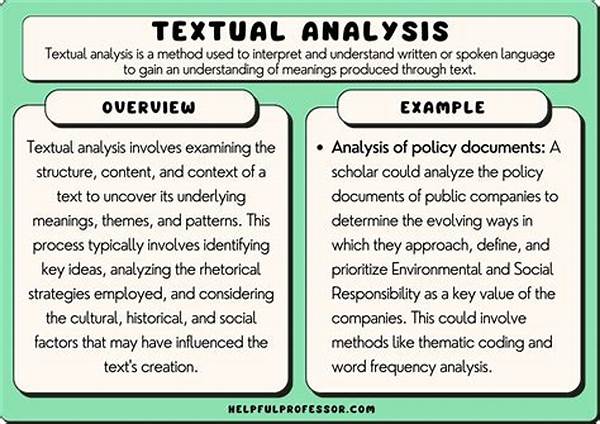
 0
0
 0
0
The complexity of textual data necessitates a structured approach to effectively analyze and interpret the myriad of information contained within texts. As a burgeoning field, textual analysis leverages frameworks for textual analysis expertise to advance understanding, interpretation, and decision-making processes. These frameworks offer systematic methodologies, tools, and protocols essential for comprehending and extracting meaningful insights from text-based data.
Read Now : Minimizing Confirmation Bias Strategies
Understanding Textual Analysis Frameworks
Frameworks for textual analysis expertise are pivotal in structuring the approaches used to dissect and interpret textual data. These frameworks typically encompass various methodologies, including qualitative and quantitative techniques, which aid in comprehensively understanding textual content. By adopting these structured models, researchers and analysts can consistently replicate results and ensure the reliability of their findings. Furthermore, these frameworks facilitate a nuanced exploration of texts, allowing experts to delve into underlying themes and patterns that might otherwise remain obscured. As more industries recognize the value of textual data, the demand for robust frameworks for textual analysis expertise continues to grow. Their implementation not only enhances the accuracy of analysis but also broadens the scope, enabling application across diverse fields such as linguistics, social sciences, and marketing. As a result, textual analysis frameworks have become indispensable tools in the quest for deeper insights and understanding in an increasingly data-driven world.
Components of Textual Analysis Frameworks
1. Data Collection: Frameworks for textual analysis expertise begin with the systematic gathering of data, ensuring that it is comprehensive and relevant to the analysis.
2. Processing Techniques: These frameworks incorporate advanced processing techniques to prepare textual data for analysis, often involving steps such as tokenization and normalization.
3. Analytical Methods: They employ various analytical methods, including content analysis and sentiment analysis, to derive meaningful insights from the text.
4. Interpretation Models: Interpretation models within these frameworks help in understanding context, nuances, and implicit meanings within textual data.
5. Reporting and Visualization: Effective frameworks include mechanisms for reporting findings through visualization tools, aiding in the clear communication of results.
Advantages of Using Frameworks in Textual Analysis
Frameworks for textual analysis expertise offer numerous benefits that enhance the proficiency and accuracy of textual data examinations. These frameworks provide a standardized approach, enabling consistency in analyses and allowing multiple researchers to produce comparable results. By employing structured methodologies, these frameworks ensure that all aspects of the text are thoroughly investigated. This comprehensive approach mitigates biases and inconsistencies that might arise from ad-hoc analyses. Moreover, frameworks facilitate the integration of technology, including artificial intelligence and machine learning, which enhance the capability of analyzing large datasets efficiently. Such integration aids in uncovering patterns and trends that might be imperceptible through traditional methods. Ultimately, frameworks for textual analysis expertise empower practitioners to tackle complex texts with increased rigor and depth, augmenting the potential of textual data to inform and influence decisions across various domains.
Key Considerations in Developing Textual Analysis Frameworks
1. Scalability: Ensuring that frameworks can handle an increasing volume of textual data efficiently.
2. Flexibility: Designing adaptable frameworks that can be applied to various types of textual data and contexts.
3. Interdisciplinary Integration: Incorporating methodologies from multiple disciplines to enrich the analysis process.
4. Technology Integration: Leveraging cutting-edge tools and technologies to enhance analytical capabilities.
Read Now : Guidelines For Flawless Abstract Preparation
5. User-Friendliness: Ensuring frameworks are easy to use and understand by both experts and non-experts alike.
6. Reliability and Validity: Maintaining high standards of reliability and validity in the findings produced.
7. Ethical Considerations: Addressing ethical aspects, including data privacy and bias mitigation, within the framework.
8. Transparency: Providing clear documentation and rationale for methodologies used in frameworks.
9. Cost-Effectiveness: Creating frameworks that are resource-efficient and sustainable in the long term.
10. Continuous Improvement: Updating and refining frameworks based on feedback and technological advancements.
Challenges and Future Directions
Although frameworks for textual analysis expertise have significantly advanced the field, challenges remain. Developing frameworks that seamlessly integrate across different technical environments and adapt to rapidly changing technologies requires continuous innovation. Furthermore, ensuring that frameworks remain accessible and understandable for users with varying levels of expertise is crucial in fostering widespread adoption. The privacy and ethical use of data present ongoing challenges, making it imperative to embed robust ethical guidelines within these frameworks. As the volume and diversity of textual data continue to grow, future frameworks will likely incorporate even more sophisticated algorithms and machine learning techniques. This evolution will enhance their ability to process and interpret vast amounts of data at unprecedented speeds and accuracy, paving the way for more nuanced and profound insights from textual data.
The Importance of Frameworks for Textual Analysis Expertise
Frameworks for textual analysis expertise are vital in equipping researchers and analysts with the tools necessary to navigate complex datasets systematically. These frameworks offer structured approaches that enhance the credibility and reproducibility of analyses across diverse fields. In today’s digital age, where vast amounts of information are disseminated through textual formats, the ability to efficiently and accurately analyze text is more critical than ever. These frameworks play an instrumental role in aiding professionals to extract pertinent insights from data, thereby informing decision-making processes in various sectors. Hence, investing in the development and refinement of these frameworks is crucial for leveraging the full potential of text-based data in an increasingly information-centric world.
Conclusion
In conclusion, frameworks for textual analysis expertise offer indispensable tools in the realm of text interpretation and analysis. By facilitating structured, consistent, and intelligent analysis, these frameworks help overcome many of the challenges posed by vast and complex textual datasets. They enable practitioners from various fields to unearth insights and make informed decisions based on data-driven evidence. As the need for comprehensive textual analysis continues to expand, the role of these frameworks becomes even more pronounced, highlighting their significance in contemporary research and analytics. Fostering advancements in these frameworks will undoubtedly pave the way for more sophisticated and effective analyses, embracing the future of data-driven exploration.


