 By Lawrence Perez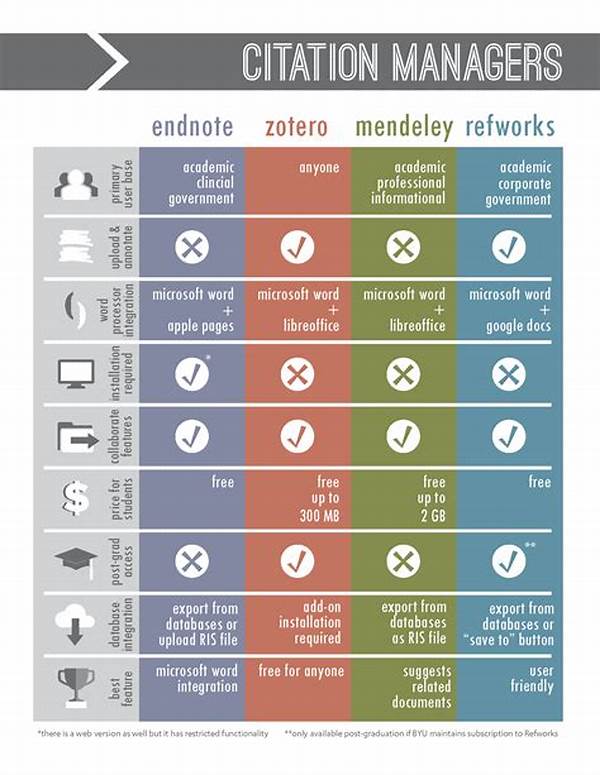
 0
0
 0
0
In the modern academic landscape, managing references efficiently is crucial for researchers, students, and academics alike. With a myriad of bibliography software available, choosing the right tool can be a challenging task. Each software offers distinct features that cater to various needs, from ease of use to advanced management capabilities. This article provides a comprehensive top bibliography software comparison to assist individuals in making informed decisions based on their specific requirements. As academic integrity and precision become increasingly vital, selecting the appropriate bibliography tool is of paramount importance.
Read Now : Time Management Skills To Reduce Student Stress
The Importance of Bibliography Software in Academic Research
The integration of bibliography software into academic research has transformed how scholars and students manage and organize their references. These tools not only streamline the research process but also ensure accuracy and consistency in citations. The rise of digital mediums has further accentuated the need for efficient reference management systems. As a result, the software available today has evolved to offer sophisticated functionalities that address the diverse challenges faced in the academic domain.
In conducting a top bibliography software comparison, it is evident that these tools play an essential role in enhancing productivity and maintaining accuracy. By automating citation creation and keeping references well-organized, researchers can dedicate more time to actual research and analysis. Additionally, the collaborative features present in many of these applications facilitate peer interaction and collective contributions, which are crucial for modern academic environments. As research output expands, so does the reliance on these technological tools to maintain impeccable academic standards.
Selecting the most suitable bibliography software requires a careful assessment of its features, user-friendliness, and compatibility with other platforms. Each software brings distinct advantages that cater to specific user preferences and research fields. Through a comprehensive top bibliography software comparison, researchers can identify the tools that best align with their academic pursuits, ensuring that their work is supported by robust citation management systems.
Key Features to Consider in Bibliography Software
1. User Interface and Ease of Use:
2. Integration with Word Processors:
3. Support for Multiple Citation Styles:
4. Cloud Storage and Syncing Capabilities:
5. Collaboration Tools:
Comparative Analysis of Leading Bibliography Tools
The landscape of bibliography software is diverse and continually evolving. Each tool offers unique features tailored to the differing needs of its user base. When undertaking a top bibliography software comparison, several leading applications consistently emerge as popular choices. These tools are equipped with a variety of features that cater to both novice and experienced researchers, offering streamlined processes for managing citations and references effectively.
Key players in the bibliography software market include EndNote, Zotero, Mendeley, and RefWorks. EndNote is renowned for its extensive customization options and robust integration with various research databases. Zotero, on the other hand, is favored for its open-source platform, providing flexibility and community-driven enhancements. Mendeley stands out with its social networking features, fostering academic collaboration and resource sharing. RefWorks offers an easy-to-navigate interface with strong support for institutional access, making it a preferred choice in academic settings.
Read Now : Language Style In Professional Writing
Choosing the right software hinges on individual preferences and research needs. Through meticulous top bibliography software comparison, users can evaluate the strengths and weaknesses of each tool, ensuring that their choice aligns with their academic objectives and technological preferences. With ongoing advancements in this field, it is vital to stay informed about the new features and updates that can further optimize research workflows.
Top Bibliography Software Features Explored
Conducting a comprehensive top bibliography software comparison involves delving into the specific features that distinguish each tool. This exploration provides insights into the practical applications and usability of various bibliographic software.
The Future of Bibliography Software and Its Impact on Research
The continual advancement of technology suggests transformative changes for bibliography software, promising enhanced functionalities that address emerging challenges in academic research. As artificial intelligence and machine learning gain traction, future bibliography tools are expected to incorporate these technologies to offer more precise and automated citation management solutions. The integration of AI in bibliography software could potentially revolutionize literature reviews, enabling researchers to identify relevant sources more efficiently.
The implications of these developments are profound for the academic community. Enhanced tools born from top bibliography software comparisons will likely improve research quality by reducing manual errors and freeing up time for deeper analysis. Furthermore, collaborative features will become more sophisticated, enabling seamless teamwork across geographical boundaries. As academia evolves towards an increasingly digital landscape, the continuous refinement and innovation of bibliography software will play a fundamental role in supporting scholarly activities.
Concluding Observations on the Evolution of Bibliography Software
Reflecting upon the evolution of bibliography software highlights the dynamic nature of academic research tools. The relentless pursuit of efficiency and accuracy underscores the necessity for ongoing top bibliography software comparisons, ensuring that the most effective tools are identified and employed. This progressive journey showcases the interplay between technological advances and academic needs, as each new iteration of software strives to better support the shifting demands of researchers.
The pivotal role of bibliography software in the academic sphere cannot be overstated. By facilitating meticulous organization and management of references, these tools enable researchers to focus their energies on generating impactful scholarly contributions. As technology continues to evolve, so too will the capabilities of bibliography software, solidifying their indispensable status within the realm of academia. Users are encouraged to engage with ongoing top bibliography software comparisons to remain cognizant of the latest features and developments, maximizing the utility of these essential academic tools.
Strategies for Selecting Suitable Bibliography Software
The selection of appropriate bibliography software necessitates a thorough understanding of one’s specific research requirements. Engaging in a top bibliography software comparison allows users to align their choice with the desired features and capabilities, thus optimizing their academic productivity. Prioritizing user-friendly interfaces, robust functionality, and seamless integration with other research tools are critical factors in this decision-making process.
Awareness of institutional preferences and compatibility with existing workflows further informs the selection process. Researchers should also contemplate the scalability of the software, considering both immediate needs and potential future demands. Through discernment and comprehensive comparison, researchers can ensure that their chosen bibliography software enhances their research experience, underpinning their academic endeavors with a robust and reliable reference management system.


